Loading Howl Media Labs
Preparing the page and animations...
Loading Howl Media Labs
Preparing the page and animations...
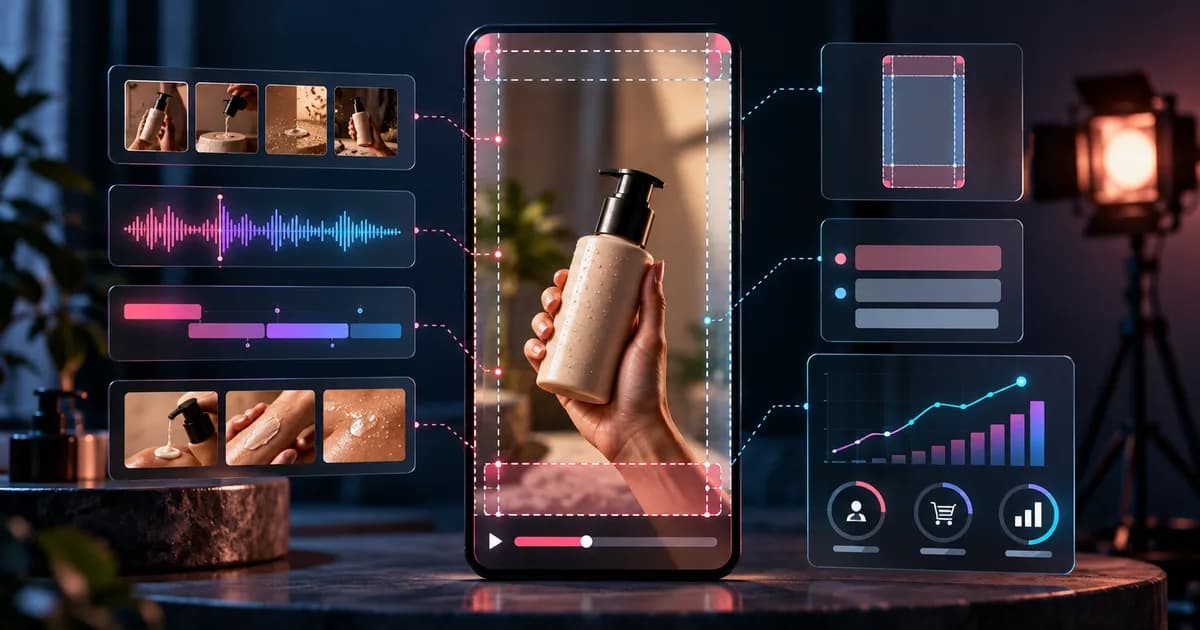
Audit Meta Reels ads in three layers: confirm 9:16 production, safe-zone placement and commercially usable audio; diagnose whether the opening, proof and offer work without relying on platform polish; then test one meaningful creative variable against purchase-quality guardrails. Do not call a Reel successful from thumb-stop rate or attributed ROAS alone.
The point is not to make every ad look like an organic trend. It is to make the message native enough to earn attention while preserving brand clarity, truthful product evidence and a measurable path to purchase.
No. Relatability is a creative quality, not an excuse for unclear production or unsupported claims. Meta's October 2026 Edits Film Festival recap highlighted spontaneity, relatability, realness, humour and distinctive storytelling in an Indian creator context. That is useful qualitative direction, but it is not advertising-performance evidence.
For a paid Reel, translate the direction into testable choices: a recognisable situation, natural delivery, product use that feels observed rather than staged, and language the intended buyer actually uses. Keep the offer, disclosure, product proof and landing-page promise precise. Then compare the relatable execution against a more polished control using the same commercial decision rule.
4.5x Total ROI
See how a bespoke tailoring brand hit 4.5x total ROI across channelsRead it →
Begin with release hygiene. A strong concept can fail if the crop hides the product, the caption sits behind interface controls or the audio cannot be used commercially.
Meta's Reels ads guidance recommends vertical 9:16 video, audio and key messages inside the safe zone. It also describes placement asset customisation and Advantage+ creative options. Treat these as production capabilities, not proof that an automatically adapted asset communicates well.
Check every final export for:
Watch each ad once with sound and once muted. Reels can be sound-on, but user context varies; the core proposition should not disappear when audio is unavailable.
Do not assume a sound used in an organic post is cleared for paid promotion. Instagram's music-library guidance says its licensed library is intended for personal, non-commercial use, that business access can be restricted and that availability can vary by country or region. It points businesses toward Meta Sound Collection for commercially usable music.
Record for each asset:
| Audio field | Evidence required | | --- | --- | | Track or source | File, library entry or licence reference | | Rights holder | Creator, stock provider or platform collection | | Permitted use | Paid social, geography, term and edits | | Expiry | Date or perpetual-use evidence | | Creator permission | Written approval when creator-owned audio is involved |
This is a workflow control, not legal advice. Escalate unclear licences before launch rather than removing a winning ad after spend has accumulated.
The audit should identify what the opening actually does, not label it vaguely as a hook.
Useful opening functions include:
Score the opening on buyer relevance, product visibility, comprehension and distinctiveness. A high view-through rate can still attract the wrong audience. Pair video engagement with landing-page sessions, qualified add-to-cart, checkout and net-order evidence.
The creative-fatigue guide explains why falling results should not automatically be blamed on repetition. The short-form video strategy covers the wider role of short-form content across the funnel.
A Reels ad has limited time, so it should not attempt to answer every question. It should present the most important evidence for its chosen angle.
For a skincare product, proof might be texture, application, ingredient relevance and a clearly qualified user result. For apparel, it might be drape, movement, fit context and fabric detail. For electronics, it might be setup, latency, interface or a side-by-side task.
Check whether the ad:
Use the Meta Ad Library to observe active category conventions and competitor angles. It shows what is running, not what is profitable, incremental or approved for copying.
Consider a fictional Indian personal-care brand auditing four active Reels over 21 complete days.
| Creative | Opening angle | Spend | 3-second view rate | Landing-page view rate | Net purchase rate | | --- | --- | ---: | ---: | ---: | ---: | | A | Ingredient claim | ₹1,80,000 | 32% | 41% | 1.4% | | B | Product demonstration | ₹2,10,000 | 25% | 54% | 2.2% | | C | Creator reaction | ₹1,60,000 | 39% | 34% | 1.1% | | D | Problem-solution sequence | ₹2,40,000 | 29% | 57% | 2.5% |
Creative C wins on early video engagement but sends the weakest qualified traffic. Its reaction earns attention without showing enough product mechanism or offer context. Creative D has a lower three-second view rate but the strongest transition into net purchases.
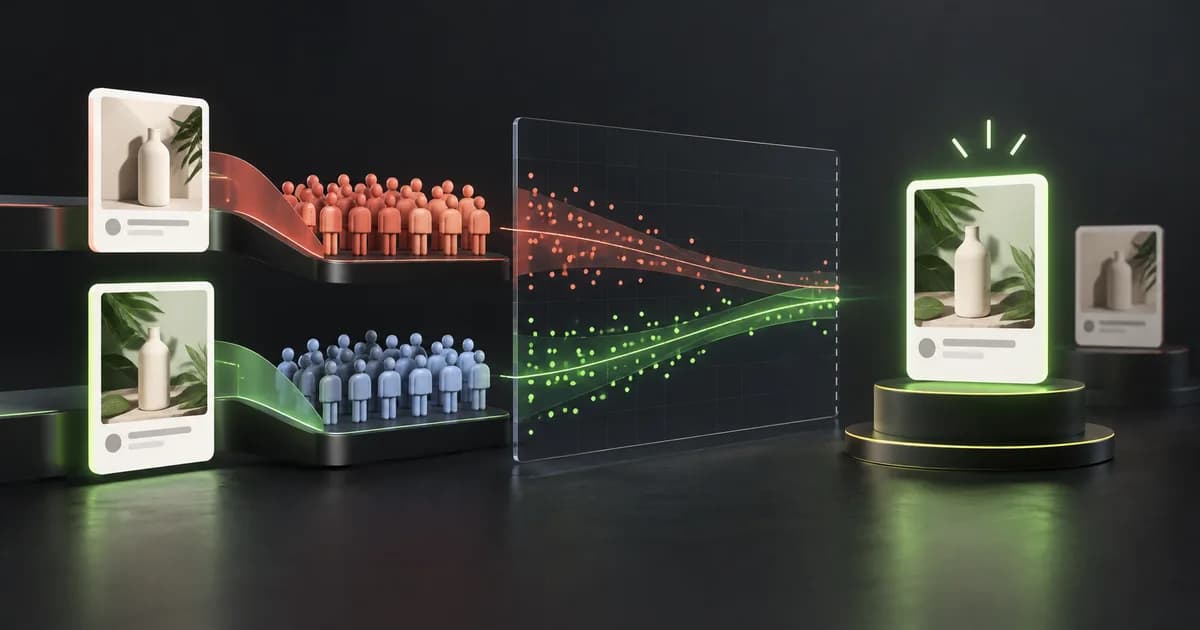
The next test is not “make C more colourful.” It compares two opening sequences for D while holding product proof, offer, creator, CTA, landing page and audience constant.
Method: group ads by the primary creative hypothesis, use one consistent attribution and order-quality window, reconcile purchases after cancellations and returns, and compare both attention and commercial progression. All figures are synthetic and are not Meta or HML benchmarks.
Write the hypothesis before production. For example:
> Showing the product result before explaining the ingredient will improve qualified landing-page visits and net purchases because cold viewers understand the outcome faster.
Then define:
Use the Creative Testing Sample Size guide to avoid declaring a winner from a few cheap conversions. The Conversion Rate Calculator helps check funnel rates, while the conversion-rate glossary keeps numerator and denominator definitions explicit.
Use a sequence rather than a single score:
| Layer | Diagnostic metrics | Decision question | | --- | --- | --- | | Delivery | Spend, reach, CPM, placement share | Did the ad receive a fair opportunity? | | Attention | Early views, hold rate, completion | Did the opening earn continued viewing? | | Intent | Outbound CTR, landing-page views | Did the ad create qualified curiosity? | | Commerce | Add-to-cart, checkout, net purchase rate | Did interest become durable orders? | | Economics | CAC, contribution, return or cancellation rate | Was the acquired demand valuable? |
Do not blend organic Reel performance and paid ad performance without labelling the difference. Social interactions may inform creative resonance, but paid delivery, attribution and commercial intent are different systems.
A decision-ready audit should contain:
HML's consumer electronics full-funnel case study shows why creative and media decisions need shared commercial measurement; its results are not benchmarks for the synthetic example above.
If your team is producing more Reels without learning which messages create qualified demand, request a Reels creative and measurement audit from HML's brand strategy team. The outcome should be a prioritised testing system—not a longer list of disconnected content ideas.
Reviewed by rajkumar-tahalani on 3 November 2026. Access dates are shown for time-sensitive references.
Brand & Creative
Creative Testing Sample Size for Meta & Google Ads: India Guide

Brand & Creative
Brand Lift vs Conversion Lift: A Creative Measurement Guide for Indian D2C
Free Tool
CPM & CPC Calculator
Work out CPM, CPC, and CTR from your campaign data.
Case Study
4.5x Total ROI
How a Premium Bespoke Tailoring Brand Achieved 4.5x ROI Across Digital Channels
We help Indian D2C brands grow with performance marketing, AI automation, and AEO-ready content. Book a free strategy call and we'll show you where the biggest wins are.
Or See how a bespoke tailoring brand hit 4.5x total ROI across channels.