Loading Howl Media Labs
Preparing the page and animations...
Loading Howl Media Labs
Preparing the page and animations...

Use Brand Lift when the decision concerns awareness, recall, consideration or purchase intent; Search Lift when it concerns changes in branded search behaviour; and Conversion Lift when it concerns incremental sales or value. Do not use clicks or attributed conversions as substitutes. Choose one primary learning question, confirm eligibility and power before launch, and wait for the completed study before acting.
Creative teams often receive one vague request: “prove this ad worked.” That question hides several different outcomes. A video may improve recall without producing immediate purchases. It may increase branded searches while last-click sales remain flat. It may generate attributed conversions without causing incremental demand. A defensible measurement plan decides which of those changes matters before the campaign begins.
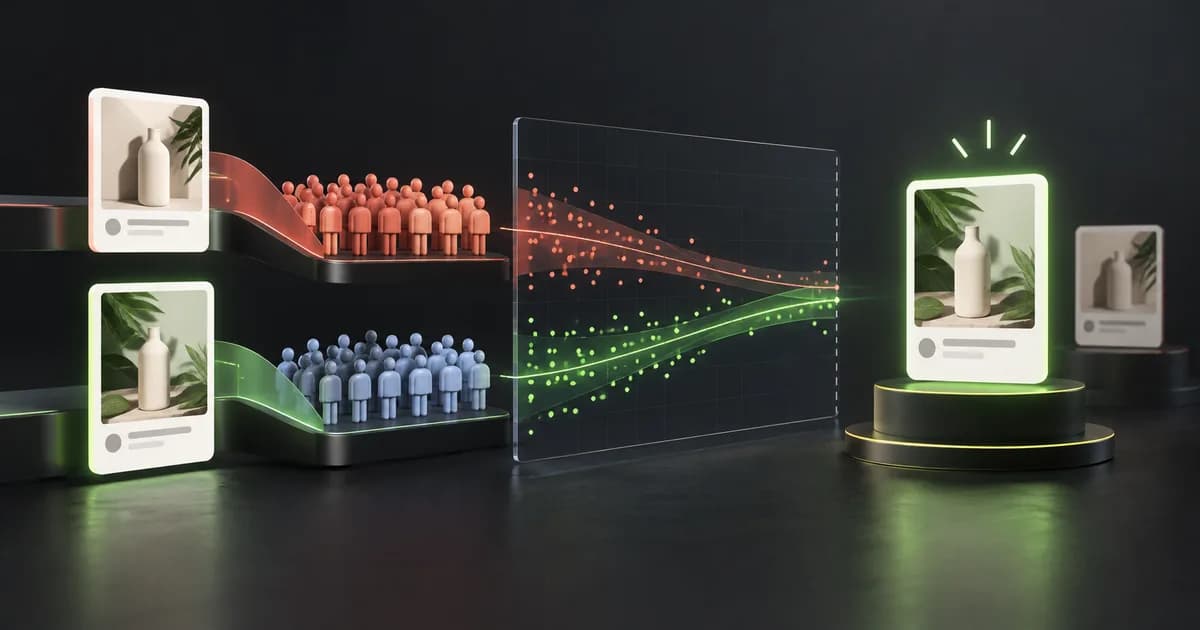
Google's overview of lift studies describes a controlled experiment in which eligible people are divided into a treatment group that can see the ads and a control group that does not. The difference between groups estimates the effect of the campaign.
| Study | Primary outcome | Best business question | Does not prove |
|---|---|---|---|
| Brand Lift | Survey-based change in recall, awareness, association, consideration, favourability or intent | Did the creative change how people think or feel? | Incremental orders or profit |
| Search Lift | Change in searches associated with the brand or product | Did exposure create additional search demand? | That every extra search converted |
| Conversion Lift | Incremental conversions or conversion value | Did the campaign cause additional business outcomes? | Why the creative worked |
Clicks, view rate, watch time, platform conversions and attributed ROAS still help diagnose delivery. They are not replacements for a control group.
Choose Brand Lift when the creative hypothesis is about memory or perception:
Google's Brand Lift documentation says surveys are shown to people who saw the ads and people who were eligible but did not see them. The difference in positive responses is used to calculate outcomes such as absolute lift, relative lift, lifted users and cost per lifted user.
Availability is a real constraint. Google states that Brand Lift is not available to every account and normally requires a Google account representative. Campaign, country, budget and survey-response requirements also matter. Confirm eligibility before promising the result in a media plan.
For Demand Gen, Google's setup guidance says Brand Lift measurement prioritizes video delivery on YouTube and does not capture other Demand Gen channels such as Gmail or Discover. The measured treatment therefore may not represent every impression in a cross-channel campaign.
Search Lift is useful when the hypothesis is that creative creates active demand before a purchase occurs. Examples include:
Do not treat all branded-search growth as causal. Public relations, retail activity, seasonality, offline media, promotions and competitor events can change search behaviour. A lift study is valuable because it creates an eligible control rather than comparing this week with last week.
Search Lift is a bridge metric, not a revenue metric. Pair it with landing-page, search-term and downstream conversion analysis, but keep the causal search result separate from attributed sales.
Use Conversion Lift when the decision is commercial:
Google's user-based Conversion Lift documentation distinguishes incremental conversions from ordinary attributed conversions. Attributed conversions follow the account's click, view and attribution settings. Conversion Lift compares outcomes in treatment and control groups and is intended to estimate conversions that would not have happened without exposure.
The key metrics include:
Google warns that very high relative-lift percentages can occur when control activity is low. Always read the absolute outcome, uncertainty and group volumes alongside the percentage.
Hook rate, hold rate, thumb-stop rate, completion rate and engagement can explain how creative earned attention. They cannot establish whether the attention changed perception or caused sales.
Use a measurement ladder:
| Layer | Example measures | Decision supported |
|---|---|---|
| Delivery | reach, frequency, CPM and eligible impressions | Did the campaign reach enough people? |
| Attention | early hold, watch time, completion and engagement | Which execution held attention? |
| Perception | recall, awareness, association and intent lift | Did the message change minds? |
| Behaviour | search lift, site visits and qualified actions | Did people take a meaningful next step? |
| Commercial causality | incremental orders, value, CPA and contribution | Did the campaign create additional business? |
An ad can win at one layer and lose at another. A high-completion video may entertain without communicating the brand. A lower-completion product demonstration may generate more incremental orders. Keep the creative diagnosis connected to the chosen business outcome.
The creative-fatigue measurement guide helps diagnose decay after launch. The creative-testing sample-size guide explains why low-volume winners often disappear when the test is repeated.
Google's Lift status and metrics guidance explains that smaller absolute effects require more survey responses. Its current general guidance says strong campaigns may begin detecting lift at about 2,000 responses per metric, while the recommended budget minimum may correspond to roughly 4,100 responses. A study with no detectable lift after much higher response volume may still report no lift detected.
Those figures are platform guidance, not an India-specific performance benchmark. Actual eligibility and detectable effect depend on the account, country, campaign and metric. Do not launch three survey questions merely because the interface permits them if the budget can power only one useful learning question.
Before launch, record:
Consider a fictional Indian skincare brand testing a new education-led video platform. The figures below are synthetic and are not a benchmark.
| Measure | Brand study | Conversion study |
|---|---|---|
| Spend | ₹24,00,000 | ₹36,00,000 |
| Primary question | Did consideration improve? | Did prospecting cause new-customer orders? |
| Treatment evidence | 52.8% positive survey response | 4,860 new-customer orders |
| Control evidence | 49.6% positive survey response | 4,520 new-customer orders |
| Absolute effect | +3.2 percentage points | +340 incremental orders |
| Relative effect | 6.5% relative Brand Lift | 7.5% relative Conversion Lift |
| Efficiency | ₹18 per lifted user | ₹10,588 incremental CPA |
Method: define the product and consideration question before launch; use mutually exclusive eligible groups; freeze the hero message and landing experience; exclude a major sale period; deduplicate new-customer orders; wait for the completed studies; and compare the incremental CPA with contribution margin rather than attributed ROAS.
The studies answer different questions. The Brand Lift result supports the claim that the campaign changed consideration among the measured audience. The Conversion Lift result supports an estimate of additional orders. Neither identifies which edit, scene or hook caused the effect without a more specific creative test.
Use the Incrementality Lift Calculator to document treatment and control outcomes, and the incrementality glossary to align causal terminology across brand, media and finance teams.
Write a hypothesis that connects one creative change to one measurable mechanism:
> Showing the product problem in the first three seconds, followed by a branded demonstration, will improve consideration among category-aware non-customers without reducing incremental new-customer orders.
Then separate the evidence:
Do not change the audience, offer, placement mix, landing page and creative simultaneously if the goal is to learn about creative. If business constraints require several changes, label the test as a package rather than attributing the result to one execution detail.
HML's creator partnership ads measurement guide applies this separation to creator media. The Star Network brand-awareness case study provides campaign context, but its reported outcomes are not evidence for the synthetic example above.
A one-page brief should name:
If a team is optimizing view rate, attributed ROAS and survey lift in the same scorecard without identifying the primary decision, request a creative measurement plan from HML's brand strategy team. The deliverable should be a testable learning agenda and evidence hierarchy—not another dashboard containing incompatible definitions of “worked.”
Reviewed by rajkumar-tahalani on 29 September 2026. Access dates are shown for time-sensitive references.
Brand & Creative
Creative Testing Sample Size for Meta & Google Ads: India Guide

Performance Marketing
Google Ads Data Strength Uplift: A Measurement Audit for Indian D2C Brands
Free Tool
ROAS Calculator
Measure your return on ad spend in seconds.
Case Study
4.5x Total ROI
How a Premium Bespoke Tailoring Brand Achieved 4.5x ROI Across Digital Channels
We help Indian D2C brands grow with performance marketing, AI automation, and AEO-ready content. Book a free strategy call and we'll show you where the biggest wins are.